The Local Trends Conference in Sopot
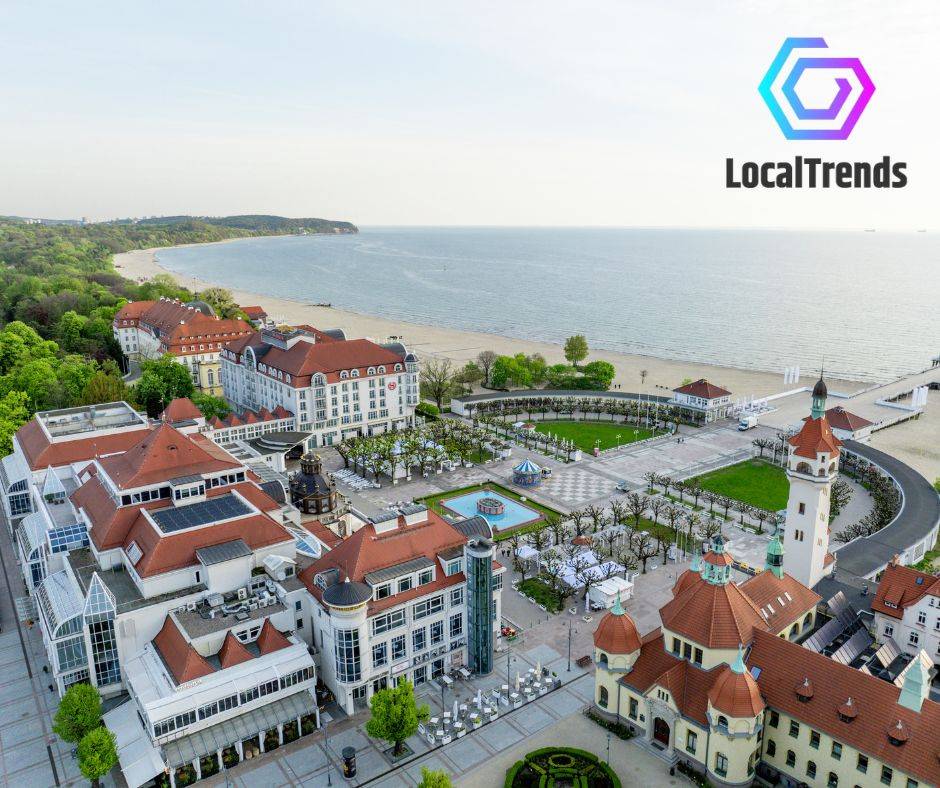
On April 15–16, 2026, the 6th edition of Local Trends – the Local Government Financial Congress will take place at the Sheraton Sopot Hotel. For years, this event has attracted local government leaders, experts, business representatives, and members of the academic community. The Congress will once again become a central forum for discussions on the future of Polish local public finances, key challenges, and development directions for local communities.
The Congress creates a space for presenting economic analyses and exchanging experiences related to municipal financial policy, European policies, investment financing mechanisms, and development strategies. Thematic debates will address current trends, legislation, legal and tax changes, as well as opportunities and risks, focusing on their economic and financial dimensions.
This year’s edition highlights the key role of cooperation as the foundation for long-term and sustainable local development, in line with the Poland Development Strategy 2030, as well as complementary national and European programs. In the face of demographic and financial challenges, as well as energy and digital transformation, local governments need a partnership-based model of operation—one built on collaboration between municipalities, regions, businesses, financial institutions, academia, and central administration.
According to many experts, the ability to build lasting partnerships and combine competencies across sectors will determine the competitiveness and resilience of Polish cities and regions in the coming years. The theme of partnerships and cooperation features prominently in this year’s program, reflecting insights already emphasized by experts who contributed to last year’s publication Local Trends: On Trends, Visions and Development Strategies, available at https://localtrends.pl/
This year’s Congress moves from diagnosis to practice, focusing on how to effectively design and implement cooperation within Polish local communities. Debates will center on concrete models of inter-municipal, interregional, and public-private cooperation, as well as collaboration between local governments, academia, and development institutions. The goal is to identify tools that increase investment efficiency, reduce public service costs, and improve the use of available funding sources - especially in social policy, education, and energy transformation.
The main thematic areas of this year’s Congress are:
The Congress creates a space for presenting economic analyses and exchanging experiences related to municipal financial policy, European policies, investment financing mechanisms, and development strategies. Thematic debates will address current trends, legislation, legal and tax changes, as well as opportunities and risks, focusing on their economic and financial dimensions.
This year’s edition highlights the key role of cooperation as the foundation for long-term and sustainable local development, in line with the Poland Development Strategy 2030, as well as complementary national and European programs. In the face of demographic and financial challenges, as well as energy and digital transformation, local governments need a partnership-based model of operation—one built on collaboration between municipalities, regions, businesses, financial institutions, academia, and central administration.
According to many experts, the ability to build lasting partnerships and combine competencies across sectors will determine the competitiveness and resilience of Polish cities and regions in the coming years. The theme of partnerships and cooperation features prominently in this year’s program, reflecting insights already emphasized by experts who contributed to last year’s publication Local Trends: On Trends, Visions and Development Strategies, available at https://localtrends.pl/
This year’s Congress moves from diagnosis to practice, focusing on how to effectively design and implement cooperation within Polish local communities. Debates will center on concrete models of inter-municipal, interregional, and public-private cooperation, as well as collaboration between local governments, academia, and development institutions. The goal is to identify tools that increase investment efficiency, reduce public service costs, and improve the use of available funding sources - especially in social policy, education, and energy transformation.
The main thematic areas of this year’s Congress are:
- partnerships
- cooperation
- investment efficiency
Key questions include how to avoid deepening development gaps between metropolitan areas and smaller local communities, and how to design public support instruments that genuinely strengthen smaller centers and foster prosperity.
The Congress will open with an inaugural speech by Paul Collier of the University of Oxford, one of the world’s leading development economists and author of a Financial Times Book of the Year. Professor Collier will deliver a lecture titled: “The Left Behind: How to Build More Equitable and Collaborative Development Models for Poorer Regions?”, introducing the key theme of equalizing opportunities.
The Polish edition of his book The Left Behind: A New Economics for Neglected Places will also premiere in Sopot. Plenary sessions will focus on challenges faced by regions and mid-sized cities, and on building their socio-economic resilience. Another debate will examine how to design public interventions that—under the Poland Development Strategy 2035—support both metropolitan areas and smaller centers without increasing development disparities.In the afternoon, a series of parallel debates will begin, prepared in cooperation with the Program Council and Local Trends partners. Under the auspices of the National Institute of Local Government, a discussion will address chronic underfunding of delegated local government tasks. A sectoral panel will focus on financing the transformation of district heating systems, including modernization needs and available support mechanisms.
The first day will conclude with a discussion on the local government system in the face of new public task challenges, followed by a Gala Awards Ceremony presenting the Green Local Government Finance Ranking awards.
A new roundtable debate format
The first day will also introduce a new roundtable format—creating a space for real dialogue between local governments, administration, financial institutions, municipal companies, and experts, with a stronger focus on data-driven discussions and actionable recommendations. Sessions will begin with short expert presentations and conclude with concise summaries outlining next steps.
Topics will include:
The Congress will open with an inaugural speech by Paul Collier of the University of Oxford, one of the world’s leading development economists and author of a Financial Times Book of the Year. Professor Collier will deliver a lecture titled: “The Left Behind: How to Build More Equitable and Collaborative Development Models for Poorer Regions?”, introducing the key theme of equalizing opportunities.
The Polish edition of his book The Left Behind: A New Economics for Neglected Places will also premiere in Sopot. Plenary sessions will focus on challenges faced by regions and mid-sized cities, and on building their socio-economic resilience. Another debate will examine how to design public interventions that—under the Poland Development Strategy 2035—support both metropolitan areas and smaller centers without increasing development disparities.In the afternoon, a series of parallel debates will begin, prepared in cooperation with the Program Council and Local Trends partners. Under the auspices of the National Institute of Local Government, a discussion will address chronic underfunding of delegated local government tasks. A sectoral panel will focus on financing the transformation of district heating systems, including modernization needs and available support mechanisms.
The first day will conclude with a discussion on the local government system in the face of new public task challenges, followed by a Gala Awards Ceremony presenting the Green Local Government Finance Ranking awards.
A new roundtable debate format
The first day will also introduce a new roundtable format—creating a space for real dialogue between local governments, administration, financial institutions, municipal companies, and experts, with a stronger focus on data-driven discussions and actionable recommendations. Sessions will begin with short expert presentations and conclude with concise summaries outlining next steps.
Topics will include:
- education
- financing
- housing
- depopulation
- reform of local government revenues
Two days of discussion
The second day will open with a debate titled “Evaluation of Local Government Revenue Reform”, focusing on initial outcomes and possible adjustments. Participants will also explore the balance between efficiency and formalism in public procurement systems.The Congress will showcase best practices from the Pomeranian region in implementing and financing energy projects, highlighting proven models of cooperation and investment in local energy systems. Discussions will also cover diversification of funding sources for development strategies and the role of spatial planning in enhancing investment attractiveness.Later sessions will address the new architecture of European funds and preparations for the 2027–2034 funding period, as well as mechanisms supporting private investment and public-private partnerships in climate transformation.The Congress will conclude with public discussions on term limits in local government and their impact on generational change, as well as Poland’s investment potential in the context of hosting the Summer Olympic Games.
Local Trends will once again serve as a platform for dialogue among stakeholders involved in building modern and resilient local governments. Through collaboration with partners and their expertise, the Congress program is created jointly. We invite you to participate and help shape the future of Polish local governments.
Organizers:
The second day will open with a debate titled “Evaluation of Local Government Revenue Reform”, focusing on initial outcomes and possible adjustments. Participants will also explore the balance between efficiency and formalism in public procurement systems.The Congress will showcase best practices from the Pomeranian region in implementing and financing energy projects, highlighting proven models of cooperation and investment in local energy systems. Discussions will also cover diversification of funding sources for development strategies and the role of spatial planning in enhancing investment attractiveness.Later sessions will address the new architecture of European funds and preparations for the 2027–2034 funding period, as well as mechanisms supporting private investment and public-private partnerships in climate transformation.The Congress will conclude with public discussions on term limits in local government and their impact on generational change, as well as Poland’s investment potential in the context of hosting the Summer Olympic Games.
Local Trends will once again serve as a platform for dialogue among stakeholders involved in building modern and resilient local governments. Through collaboration with partners and their expertise, the Congress program is created jointly. We invite you to participate and help shape the future of Polish local governments.
Organizers:
- Centre for Strategic Thought
- MTP Group
Hosts:
- City of Sopot
- City of Poznań
- Pomeranian Voivodeship
- Greater Poland Voivodeship
Local government partners:
- Union of Polish Metropolises named after Paweł Adamowicz
- Association of Polish Cities
- Association of Polish Counties
- Association of Polish Voivodeships
- Association of Rural Municipalities of Poland